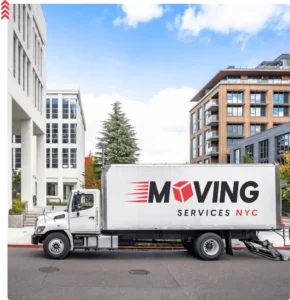
Moving a business in New York City is more complicated than packing desks, loading a truck, and delivering everything to a new address. Commercial buildings can have strict access requirements, limited loading times, freight elevator schedules, insurance rules, and security procedures that must be addressed before move day.
A successful office commercial moving in NYC project also has to protect business operations. Employees need to know where they are going, technology needs to work when they arrive, furniture needs to fit the new layout, and customers and vendors need updated information.
The physical move may last only a day or weekend, but preparing for it should begin much earlier.
Start With the New Office Before Planning the Move
Before discussing boxes and trucks, make sure the destination can actually support the business.
Review:
- Lease start date
- Building access
- Office layout
- Furniture requirements
- Internet availability
- Electrical capacity
- Security access
- Conference rooms
- Storage
- Employee seating
A company moving into an unfinished office can easily create unnecessary downtime.
If construction, electrical work, furniture installation, or network cabling is still underway, the moving schedule should account for those projects.
Confirm That the Space Can Be Legally Used as Planned
Depending on the property and intended business use, building approvals and occupancy requirements may matter.
NYC Department of Buildings explains that a Certificate of Occupancy identifies how a building or portion of a building may legally be used and occupied.
This is particularly important when a relocation also includes renovations or a significant change in how the space will be used.
Talk to Both Building Managers Early
One of the biggest NYC moving mistakes is coordinating only with the new building.
The current building may have just as many requirements for moving out.
Contact management at both properties and request their moving procedures.
Ask About
- Approved moving hours
- Freight elevator reservations
- Loading dock access
- Truck restrictions
- Protective coverings
- Security requirements
- Certificates of Insurance
- Weekend access
- Building staffing fees
Do this before selecting the final move date.
A date that works for your staff does not help if the destination freight elevator is already reserved.
Reserve the Freight Elevator Before Move Day
Freight elevator access can determine how quickly an NYC office move is completed.
Many commercial buildings restrict large moving activity to designated service elevators rather than allowing movers to use passenger elevators.
A move involving dozens of workstations can slow dramatically if the moving crew has to wait for elevator access.
Confirm the Reservation in Writing
Record:
- Date
- Start time
- End time
- Elevator number
- Loading location
- Building contact
Also ask whether the building requires the elevator to be padded or protected.
Some properties handle this themselves, while others require the moving company to provide protection.
Ask About Certificate of Insurance Requirements
Commercial buildings frequently require proof that contractors entering the property carry appropriate liability and workers’ compensation coverage.
This documentation is commonly provided through a Certificate of Insurance, or COI.
Building management may give you specific wording and insurance limits that need to appear on the certificate.
Obtain the COI Requirements Exactly as Written
Do not paraphrase them.
Forward the building’s requirements directly to the moving company or its insurance provider.
Depending on the property, the certificate may need to list parties such as:
- Building owner
- Property manager
- Management company
as certificate holders or additional insureds.
Insurance requirements differ between buildings, so receiving the certificate used for another property does not necessarily mean your new building will accept it.
Do Not Leave the COI Until the Last Minute
A rejected Certificate of Insurance can delay access even when the trucks and crew are already outside.
Submit it early enough for management to review it.
If something is missing, there should still be time to correct it.
NYC agencies themselves use detailed insurance documentation requirements for licensed contractors and permit-related work, illustrating how exact insurance documentation can be in city properties and construction environments.
For an office move, the building’s own management requirements should control what the mover needs to submit.
Read More: How Much Does It Cost Hire Movers?
Decide What Is Actually Moving
Relocation is a good opportunity to reduce what the business carries into the new office.
Do not automatically pay to transport furniture or equipment that will immediately be discarded.
Create four categories:
- Move
- Replace
- Store
- Dispose or recycle
Review Large Items First
Pay particular attention to:
- Desks
- Filing cabinets
- Conference tables
- Storage units
- Copiers
- Shelving
- Appliances
Old furniture can consume significant truck space and labor.
If the new office uses a different layout, it may not fit anyway.
Use the New Floor Plan to Guide the Move
Movers should know where items belong before they arrive at the destination.
Create a floor plan showing:
- Departments
- Workstations
- Private offices
- Conference rooms
- Storage
- Reception
- Equipment areas
Assign numbers or labels to major spaces.
Then match boxes and furniture to those labels.
Example
Instead of:
Marketing
use:
Marketing
Room 418
Desk M-07
Box 2 of 4
That gives the crew much more useful information during unloading.
Create an Asset Inventory
An office may contain hundreds of individual items.
Some are inexpensive.
Others contain sensitive information or cost thousands of dollars.
Inventory important assets before moving.
Include
- Desktop computers
- Monitors
- Laptops
- Printers
- Servers
- Specialty equipment
- Expensive furniture
- Network equipment
Record serial or asset numbers where appropriate.
Photos can also document the condition of higher-value items before transport.
Treat IT as Its Own Moving Project
One of the most expensive office-moving problems is arriving at the new workplace and discovering that employees cannot work.
Furniture can be assembled later.
An unavailable network can stop the business.
Create an IT Relocation Timeline
It may include:
- Confirming internet activation.
- Reviewing network cabling.
- Backing up critical data.
- Labeling equipment.
- Planning system shutdown.
- Disconnecting workstations.
- Transporting equipment.
- Reconnecting network systems.
- Testing internet and phones.
- Testing employee workstations.
The new internet connection should ideally be active and tested before the main move whenever possible.
Back Up Important Data
Moving computers introduces physical risk.
A workstation can be damaged even when it is packed carefully.
Make sure business-critical data is backed up before hardware is disconnected.
Depending on your environment, that may include:
- Cloud backups
- Server backups
- External secure backups
Verify that the backups are usable.
Simply assuming an automatic backup ran successfully is not the same as confirming that important data can be restored.
Label Cables and Devices
Technology setup becomes much easier when cables stay associated with the correct devices.
Use clear labels for:
- Monitor cables
- Docking stations
- Power adapters
- Phones
- Specialized peripherals
Where practical, keep each employee’s accessories together.
That prevents IT staff from spending hours sorting nearly identical equipment after delivery.
Plan How Much Downtime the Business Can Accept
Every business has a different tolerance for disruption.
Some offices can close for one weekday.
Others need customer service or operations available throughout the relocation.
Common Move Strategies Include
Weekend Move
Work stops Friday and resumes Monday.
Phased Move
One department relocates at a time.
Parallel Setup
The new office becomes operational before the old location is completely closed.
Choose the approach based on business needs rather than moving convenience alone.
Assign One Internal Move Coordinator
Too many decision-makers can slow a commercial move.
Designate one person or a small relocation team to coordinate:
- Movers
- Building management
- IT
- Employees
- Vendors
- Furniture installers
The moving crew should know who can approve decisions if conditions change on move day.
Without that structure, even simple questions can cause delays.
Tell Employees What They Are Responsible For
Do not assume everyone knows what to pack.
Provide written instructions.
For example:
Employees Pack
- Personal items
- Desk contents
- Small office supplies
IT Handles
- Computers
- Network devices
- Phones
Movers Handle
- Desks
- Chairs
- Cabinets
- Packed boxes
A clear division reduces confusion and prevents employees from disconnecting sensitive equipment that should have been handled by IT.
Protect Confidential Records
Businesses may have documents containing:
- Employee information
- Customer data
- Financial records
- Legal documents
- Medical information
Sensitive materials should not be packed casually.
Use a Controlled Process
Consider:
- Locked file containers
- Numbered boxes
- Chain-of-custody records
- Assigned employees
- Secure shredding for records no longer needed
Moving can also be an opportunity to reduce unnecessary paper storage before transporting it to another office.
Update Your Business Address Early Enough
Customers, vendors, banks, insurers, and government agencies may all have your current address on file.
Create an address-change list.
Common Updates Include
- Company website
- Google Business Profile
- Invoices
- Banks
- Insurance
- Vendors
- Customer communications
- Licenses
- Professional registrations
- Business cards
- Online directories
Some regulated NYC businesses have formal address-change requirements with city agencies. For example, the NYC Department of Buildings requires certain licensed trades to have a proposed business address approved before occupying it and to update documentation afterward.
Check the rules that apply specifically to your business and industry.
Coordinate Vendors Before the Move
Commercial relocations often involve more companies than the mover.
Potential vendors include:
- Internet provider
- IT contractor
- Furniture installer
- Copier company
- Security provider
- Access-control company
- Cleaning service
- Electrician
Create one timeline showing when each vendor needs access.
The Order Matters
For example:
Network cabling → Furniture → IT equipment → Employee arrival
Installing workstations before necessary cabling is complete can cause furniture to be moved twice.
Sequencing prevents duplicated work.
Plan the Old Office Handover Too
The move is not finished when the last truck leaves.
Your lease may require the former office to be returned in a specific condition.
Check whether you need to:
- Remove furniture
- Patch wall holes
- Remove signage
- Clean the space
- Remove cabling
- Return keys
- Restore altered areas
A walk-through with property management can identify what remains.
Photograph the condition of the space after the move for your records.
Measure Large Furniture Before Moving It
A conference table may fit perfectly in the current office but not fit:
- New doorway
- Freight elevator
- Stairwell
- Destination room
Measure oversized furniture before paying to transport it.
Check:
- Door widths
- Elevator dimensions
- Hallway turns
- Ceiling height
- Final room dimensions
This can determine whether an item should be disassembled, moved intact, or replaced.
Think About Moving Day Truck Access
NYC loading conditions can be difficult.
Ask both buildings:
- Where can the truck stand?
- Is there a loading dock?
- Is curb access available?
- Are there time restrictions?
- Are special permissions required?
Do not assume the truck can simply stop directly in front of a Manhattan office building.
Where street or curb permits are involved, NYC DOT has specific permit and insurance rules depending on the activity.
The building and moving company should determine what is necessary for your particular location.
Build a Contingency Into the Schedule
Even good moving plans can encounter delays.
Possible problems include:
- Freight elevator delay
- Truck access problem
- Weather
- Building security issue
- Furniture assembly delay
- IT problem
Avoid planning the employee return so tightly that a two-hour delay becomes a major operational problem.
A small schedule buffer can be valuable.
NYC Office Relocation Checklist
Use this before finalizing the move date.
Building Requirements
- Old building contacted
- New building contacted
- Freight elevator reserved
- Loading access confirmed
- COI approved
- Moving hours confirmed
Office
- Floor plan finalized
- Furniture measured
- Items categorized
- Boxes labeled
- Asset inventory completed
Technology
- Internet active
- Data backed up
- Equipment labeled
- IT shutdown planned
- Testing scheduled
Business Operations
- Employees informed
- Customers notified where appropriate
- Vendors updated
- Business address changed
- Downtime plan created
Old Office
- Lease obligations reviewed
- Unwanted items removed
- Cleaning scheduled
- Keys returned
- Final condition documented
Plan the Business Transition, Not Just the Truck
Successful office commercial moving in NYC depends on much more than transporting desks and boxes. Building requirements, freight elevator reservations, insurance documentation, IT migration, furniture planning, employee communication, loading access, address changes, and downtime all need to be coordinated before the first truck arrives.
At Moving Services NYC, we help businesses plan and complete commercial office moves throughout New York City, including packing, furniture and equipment moving, organized transportation, and destination setup. We can coordinate the physical relocation around your building access requirements, office layout, and move schedule so your team can focus on getting operations running again at the new location.