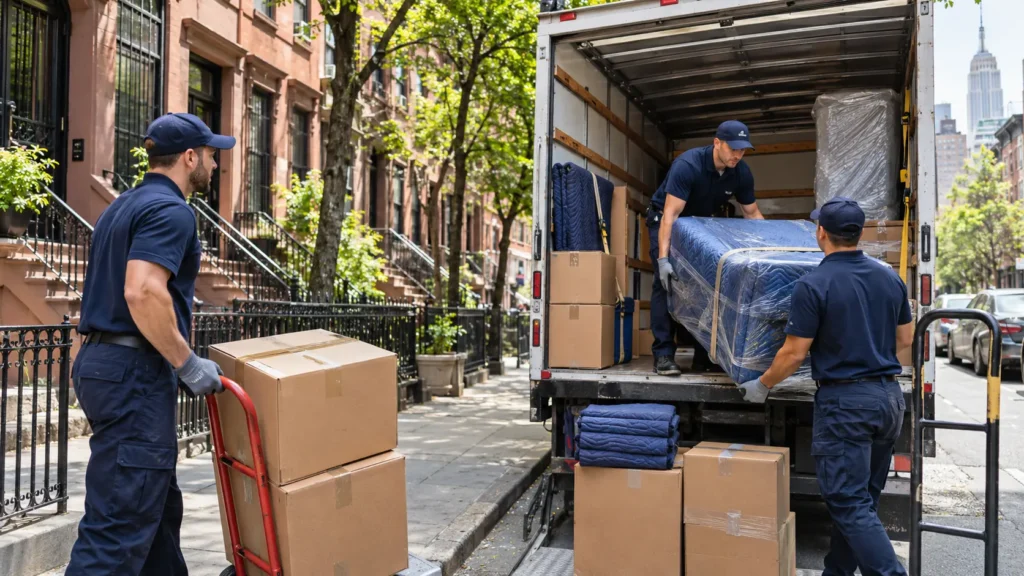
Professional movers handle long-distance relocations by planning the move, preparing detailed inventories, packing belongings, loading moving trucks, coordinating transportation, and delivering items safely to the new location. They also manage route planning, moving schedules, furniture protection, and paperwork to reduce the risk of damage, delays, and unexpected expenses.
Unlike local relocations, long distance moving requires more preparation because belongings may travel hundreds or thousands of miles. Experienced movers in NYC understand the challenges of relocating from apartment buildings, navigating busy streets, managing building requirements, and coordinating interstate transportation.
Whether you are moving to a neighboring state or across the country, understanding how professional movers manage each stage can help you prepare for a smoother and more organized relocation.
What Is Considered a Long-Distance Move?
A long-distance move generally involves relocating belongings over a considerable distance, often more than 100 miles. However, the exact distance used to classify a move varies between moving companies.
Long-distance relocations are generally divided into three categories:
- Intrastate moving: Relocating within the same state over a considerable distance.
- Interstate moving: Moving household belongings across state lines.
- Cross-country moving: Relocating across multiple states or regions of the country.
An interstate move can cover a relatively short distance, such as moving from New York City to New Jersey. However, crossing state lines means federal interstate moving regulations may apply.
Professional moving companies adjust their transportation methods, pricing, scheduling, and paperwork according to the type of relocation.
How Do Professional Movers Handle Long-Distance Relocations?
Professional movers follow a structured process that begins several weeks before moving day and continues until belongings reach their destination. Each stage helps reduce transportation risks and keep the relocation organized.
1. Initial Consultation and Moving Assessment
The moving process begins with an assessment of your household belongings and relocation requirements.
A moving consultant gathers information about your current residence, destination, preferred moving date, household size, and special transportation needs.
Depending on the company, the assessment may take place in person or through a virtual survey. This allows movers to evaluate the number of boxes, furniture pieces, appliances, and other belongings that require transportation.
They also identify potential challenges, including narrow staircases, heavy furniture, limited parking, elevator restrictions, and difficult building access.
An accurate assessment helps determine the required truck space, packing materials, number of movers, and estimated relocation cost.
2. Preparing a Detailed Moving Estimate
Once the assessment is complete, the moving company prepares a written estimate based on the services and transportation requirements.
Several factors influence the cost of long distance moving, including:
- Distance between the pickup and delivery locations.
- Shipment weight and size.
- Packing and unpacking requirements.
- Furniture disassembly and reassembly.
- Storage requirements.
- Building access and special handling.
- Moving dates and seasonal demand.
For interstate household moves, customers should understand the difference between binding and nonbinding estimates.
| Estimate Type | How It Works |
|---|---|
| Binding estimate | Establishes an agreed price for the listed belongings and services, subject to applicable changes. |
| Nonbinding estimate | Provides an approximate cost that may change based on actual shipment weight and services. |
| Binding not-to-exceed estimate | Generally allows customers to pay a lower applicable amount if the final shipment costs less than estimated, according to the agreement. |
Under federal regulations, interstate movers generally cannot require payment of more than 110% of a nonbinding estimate at delivery, apart from certain permitted additional charges. Remaining applicable charges may be billed later.
Reviewing the estimate carefully helps prevent misunderstandings and unexpected moving expenses.
3. Creating a Moving Plan and Schedule
Long-distance relocations require coordination between multiple teams, transportation schedules, and delivery locations.
Professional movers establish a schedule covering packing, loading, transportation, and delivery. They also consider road conditions, truck availability, travel distance, and building access.
For customers relocating from NYC apartments, this may involve coordinating freight elevator reservations, building-approved moving hours, and insurance documentation required by property management.
If your new home is not ready when you leave your current residence, movers may also arrange temporary storage, depending on service availability.
A well-planned schedule helps minimize unnecessary waiting and ensures each stage of the relocation is properly coordinated.
4. Professional Packing and Furniture Protection
Packing is one of the most important parts of a long-distance relocation. Household belongings experience movement, vibration, and changes in environmental conditions during transportation.
Professional movers use suitable packing materials based on the size, weight, and fragility of each item.
Common packing materials include:
- Heavy-duty moving boxes.
- Protective furniture blankets.
- Packing paper and bubble wrap.
- Mattress covers and wardrobe boxes.
- Stretch wrap and protective corner guards.
- Custom crates for fragile or valuable belongings.
Fragile items such as glassware, mirrors, artwork, and electronics receive additional protection. Heavy belongings are packed into suitable boxes to reduce the risk of containers breaking during handling.
Furniture may also be disassembled when necessary to improve transportation safety and prevent damage to walls, doorways, and other belongings.
5. Preparing a Household Inventory
Before loading the moving truck, professional movers typically prepare an inventory of household belongings.
The inventory records items being transported and may include their existing condition, identification numbers, and special handling requirements.
Furniture with existing scratches, dents, or other damage should be documented before transportation. This helps distinguish pre-existing damage from problems that may occur during the move.
Boxes are commonly labeled according to their contents, destination rooms, or inventory numbers.
Customers should review the inventory before signing it and retain a copy until the relocation is complete.
6. Loading and Securing the Moving Truck
Professional movers load household belongings carefully to distribute weight properly and reduce movement during transportation.
Heavy furniture and sturdy boxes are generally positioned to create a stable load. Fragile and lightweight belongings are placed in protected areas where they are less likely to be crushed.
Moving crews use equipment such as dollies, lifting straps, furniture pads, and loading ramps to handle heavy items. Cargo straps and other securing equipment help prevent belongings from shifting during sudden stops, turns, or travel over uneven roads.
Experienced movers in NYC also take precautions to protect apartment hallways, floors, elevators, and doorframes while moving furniture out of buildings.
Proper loading helps protect both household belongings and surrounding property.
7. Transportation and Route Planning
Once the truck is loaded, the transportation stage begins. Long-distance moving companies plan routes based on travel distance, road restrictions, weather conditions, vehicle size, and delivery schedules.
Commercial drivers must also comply with applicable federal driving-hour and vehicle safety requirements.
Depending on the moving agreement, household belongings may travel in a dedicated truck or a shared shipment alongside other customers’ belongings.
Dedicated transportation may provide greater scheduling flexibility, while shared transportation can help reduce moving costs. However, shared shipments may require additional stops and longer delivery windows.
Customers should confirm their transportation arrangement before booking and understand whether belongings may be transferred between trucks during transit.
8. Communication During Transportation
Reliable communication helps customers stay informed while their belongings are traveling to the destination.
Depending on the moving company’s systems, customers may receive updates about shipment progress, estimated arrival dates, weather-related delays, and changes to delivery schedules.
Long-distance delivery is often arranged within a specific delivery window rather than an exact arrival time. Traffic, road closures, weather conditions, and transportation requirements can affect the schedule.
Maintaining communication with the moving coordinator allows customers to prepare their new residence before the shipment arrives.
9. Unloading and Final Delivery
Upon arrival, the moving crew unloads household belongings and places them in designated rooms according to customer instructions.
Furniture reassembly and unpacking may also be included if these services were arranged in advance.
Customers should compare delivered belongings with the original inventory and inspect furniture, appliances, and fragile items for visible damage.
Any missing or damaged belongings should be documented on the delivery paperwork. Taking photographs and retaining relevant records can help if a damage claim becomes necessary.
How Movers Handle the Challenges of Moving From NYC
Relocating from New York City presents challenges that are less common in suburban or rural areas. High-rise apartment buildings, narrow streets, limited parking, and building management requirements can make moving more complicated.
Professional movers in NYC account for these conditions during the planning process.
Apartment Building Requirements
Many apartment buildings require residents to reserve service elevators, follow designated moving hours, and provide a Certificate of Insurance (COI) before moving day.
A COI provides evidence of the moving company’s insurance coverage. Individual buildings may have specific coverage requirements that must be satisfied before movers are permitted to enter.
Checking these requirements early can prevent delays or denied building access.
Parking and Truck Accessibility
Finding suitable parking for a moving truck can be difficult in Manhattan, Brooklyn, Queens, and other parts of NYC.
Moving companies must consider commercial parking regulations, designated truck routes, loading restrictions, and street accessibility.
The NYC Department of Transportation restricts commercial vehicle access on most parkways and maintains specific rules governing truck parking and transportation.
In locations where large trucks cannot safely access a property, movers may arrange a smaller shuttle vehicle to transfer belongings. Customers should confirm whether this service carries an additional charge.
Staircases and Limited Space
Older apartment buildings may have narrow staircases, small elevators, and tight doorways.
Professional movers measure large furniture when necessary, disassemble suitable pieces, and use protective materials to reduce the risk of property damage.
How Long Does a Long-Distance Move Take?
Long-distance relocations can take anywhere from a few days to several weeks, depending on travel distance, shipment arrangements, weather, and scheduling.
The following table provides an illustrative planning timeline.
| Moving Stage | Estimated Time |
|---|---|
| Research and booking | 4 to 8 weeks before moving |
| Household assessment | 2 to 6 weeks before moving |
| Packing | 1 to 3 days for many households |
| Loading | Several hours to a full day |
| Transportation | Several days to two weeks or longer |
| Unloading | Several hours to a full day |
| Unpacking | 1 to 3 days or longer |
These are general planning estimates rather than guaranteed completion times. Larger households, shared shipments, storage arrangements, and cross-country relocations may require additional time.
Always confirm the pickup and delivery windows with your moving company before making travel or accommodation arrangements.
How Do Professional Movers Protect Your Belongings?
Protection involves more than packing items into boxes. Professional moving companies combine protective materials, trained handling, secure loading, and shipment documentation to reduce transportation risks.
For interstate household moves, the Federal Motor Carrier Safety Administration (FMCSA) requires movers to offer two types of valuation protection.
| Protection Type | How It Works |
|---|---|
| Full Value Protection | The mover is generally responsible for repairing, replacing, or providing an appropriate payment for lost or damaged belongings, subject to applicable terms. |
| Released Value Protection | Provides limited compensation of up to $0.60 per pound per damaged or lost article at no additional charge. |
For example, under Released Value Protection, a damaged television weighing 40 pounds may qualify for only $24 in compensation, regardless of its original purchase price.
Full Value Protection generally offers greater financial protection, although deductibles, exclusions, and other conditions may apply.
Valuation protection is not the same as a separate moving insurance policy. Review your options carefully, especially when transporting expensive furniture, electronics, artwork, or antiques.
What Items Will Professional Movers Not Transport?
Moving companies may refuse certain belongings because of transportation safety concerns, legal restrictions, or company policies.
Common restricted items include:
- Gasoline, propane tanks, and other flammable materials.
- Fireworks and explosives.
- Certain cleaning chemicals and pesticides.
- Perishable food.
- Pets and live animals.
- Certain batteries and hazardous materials.
Live plants may also be restricted when crossing state lines. Important documents, prescription medications, jewelry, and personal valuables are generally better kept with you.
Request a list of prohibited items from your moving company before packing.
How to Prepare for a Professional Long-Distance Move
Although professional movers handle most of the physical work, preparing your household in advance can improve efficiency and reduce unnecessary expenses.
Start by sorting belongings and deciding what to keep, donate, sell, or discard. Reducing shipment weight and size may help lower transportation costs.
Inform your building management about the move, reserve elevators if required, and confirm access arrangements at your new residence.
Prepare a separate bag containing clothing, toiletries, medications, chargers, important documents, and other essentials you may need before the moving truck arrives.
It is also helpful to photograph valuable belongings, back up electronic devices, arrange utility transfers, and update your mailing address.
How to Choose a Reliable Long-Distance Moving Company
Selecting the right moving company is important when your belongings will be transported over a considerable distance.
For interstate relocations, verify the company’s FMCSA registration, USDOT number, and authorization to transport household goods. Also confirm whether the company is a moving carrier that transports belongings or a broker that arranges transportation through another company.
Before hiring movers, consider the following:
- Experience with long-distance and interstate relocations.
- Written estimates and transparent pricing.
- Registration and applicable operating authority.
- Valuation protection and claims procedures.
- Customer reviews and complaint history.
- Packing, storage, and furniture handling services.
Federal regulations also require interstate movers and brokers to provide customers with information about their moving rights and responsibilities.
Avoid companies that demand unusually large upfront payments, refuse to provide written estimates, or ask you to sign incomplete documents.
Frequently Asked Questions
Do professional movers pack everything for a long-distance move?
Full-service movers can pack most household belongings, including furniture, clothing, kitchenware, electronics, and fragile items. Packing services must generally be included in your moving agreement.
Is long distance moving charged by weight or distance?
Interstate moving prices commonly depend on shipment weight, transportation distance, and additional services. Some companies also offer agreed flat-rate pricing based on their moving assessment.
Can movers store my belongings before delivery?
Many moving companies offer temporary or long-term storage options. This can be useful when your new residence is not ready for immediate delivery.
What happens if my belongings are damaged during the move?
Document the damage, take photographs, and contact your moving company. For interstate household moves, customers generally have nine months from delivery to submit a written loss or damage claim.
How far in advance should I book long-distance movers?
Booking four to eight weeks in advance is generally recommended. During summer, weekends, holidays, and busy month-end periods, earlier booking may provide more scheduling options.
Make Your Long-Distance Relocation Easier With Professional Movers
Relocating to another city or state requires careful planning, secure packing, reliable transportation, and organized delivery. Hiring experienced professionals can reduce the physical workload, protect your household belongings, and help prevent costly moving mistakes.
If you need professional long distance moving services and are searching for reliable movers in NYC, Moving Services NYC offers long-distance relocation, professional packing, furniture assembly, and move management services. Whether you are relocating your apartment, family home, or business, contact us at (212) 600-2575 to discuss your moving requirements and request an estimate.